



Podcast about the subject Listen on Spotify
Autonomous AI agents promise to revolutionize business decisions.
Generative artificial intelligence is establishing itself as the most disruptive technology for 2025, evolving from simple assistants to specialized agents capable of making autonomous decisions. According to research by the Capgemini Research Institute with 1,500 global business leaders, 32% point to AI agents as the main technological trend of the year.[4]
Gartner predicts a dramatic leap: by 2028, at least 15% of day-to-day work decisions will be made autonomously by Agentic AI systems, compared to 0% in 2024.[7] This transformation goes beyond traditional automation, creating a virtual workforce capable of offloading and amplifying human work.
Quantum and hybrid computing gain momentum.
As AI advances, computing infrastructure is also reinventing itself. Hybrid computing is emerging as a strategic paradigm, combining central processing units, graphics, edge computing, and quantum circuits to solve complex problems with superior efficiency.[6]
Semiconductors remain in the spotlight, driven by massive demand for AI-powered chips. Governments and companies are investing billions in supercomputers and quantum technology, revolutionizing fields such as climate and biological modeling.[2]
6G connectivity redefines mobility and the metaverse.
Following the expansion of 5G, 6G is emerging as the basis of the future metaverse. According to Fredrik Jejdling of Ericsson, this technology will enable immersive experiences in a cyber-physical world, uniting human actions and sensations with digital representations.[2]
Mixed reality complements this revolution: new smart lenses from Meta promise to integrate digital realities into everyday life, replacing bulky devices. From holographic calls to digital twins, these innovations break down traditional technological barriers.
Humanoid robotics and security in focus.
Humanoid robots are gaining functionality and accessibility. Companies like Boston Dynamics and startups supported by OpenAI and Nvidia are creating machines capable of autonomously learning from mistakes, acquiring skills without explicit programming.[2]
Cybersecurity is keeping pace with this expansion: AI governance platforms, post-quantum cryptography, and defenses against disinformation are becoming strategic imperatives. Gartner highlights that these technologies drive digital trust in increasingly complex ecosystems.[6]
Internet of Things explodes in 2025
The IoT is expected to explode in 2025, with a greater appearance of physical devices embedded with sensors and software connected to the internet.[3] This expansion fuels the development of smart cities, which adapt to the needs of residents in real time through interconnected networks of sensors.
Key technologies—AI, data, blockchain, IoT, and ground-based satellite connectivity—have reached a high level of maturity, enabling companies to enhance predictive capabilities and navigate constantly changing ecosystems with greater security.[4]
What changes for you?
These trends directly impact personal and professional routines. Sophisticated AI assistants anticipate daily needs, automate tasks, and personalize experiences. In businesses, business automation optimizes processes, while data analysis enhances strategic decisions. In healthcare, remote monitoring and predictive analytics are scaling up. Digital security is becoming a shared responsibility between technology and human governance.
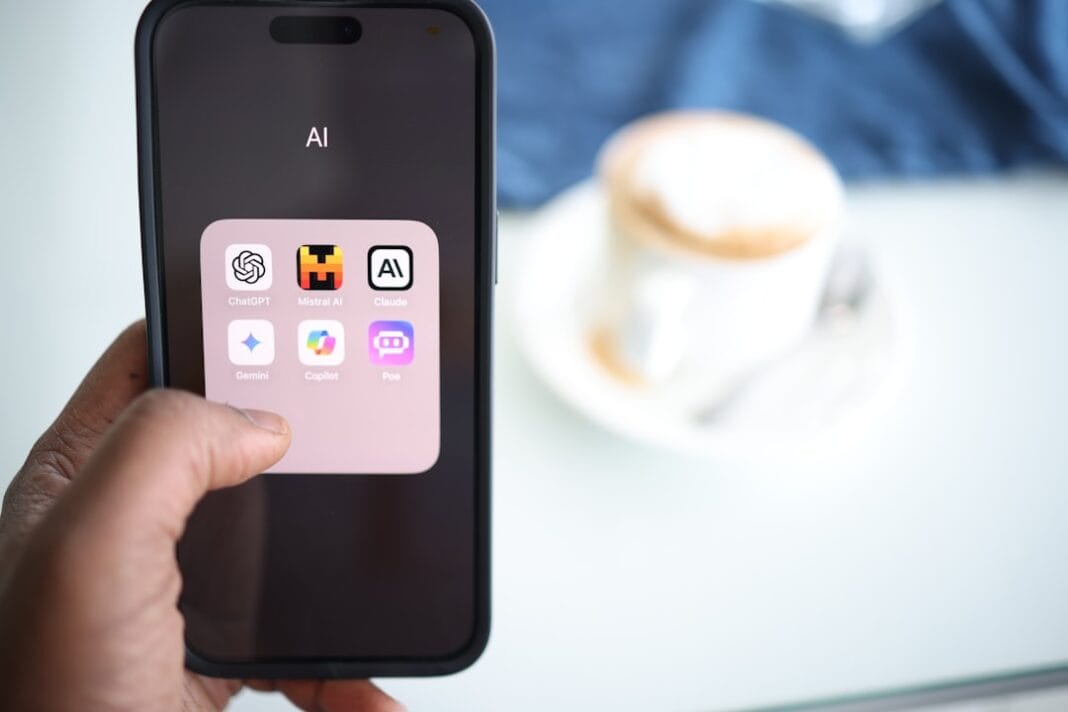
Photo by Solen Feyissa on Unsplash


 English